













Table of Contents
- How to Tell Real Leather From Synthetic Leather
- Genuine Leather vs. Faux Leather: What’s the Difference?
- How to Tell Real Leather From Synthetic: What to Look For
- Understanding Leather Types: Full Grain, Top Grain, and Split Leather
- What Does Vegan Leather Mean?
- How to Tell Real Leather From Synthetic Leather
- Frequently Asked Questions
- Sources and Further Reading
How to Tell Real Leather From Synthetic Leather
Real leather and synthetic leather can look surprisingly similar, making it difficult to tell them apart at first glance. While genuine leather comes from animal hides, synthetic alternatives are manufactured using other materials designed to create a leather-like appearance.
If you’re unsure which material you’re looking at, start by checking the product label and material description. Texture, appearance, and construction can provide additional clues, but no single at-home observation can reliably identify every type of leather.
Understanding these differences can help you make more informed decisions when shopping for leather jackets, vests, bags, and other accessories.
Genuine Leather vs. Faux Leather: What’s the Difference?
The main difference between genuine leather and faux leather is what they’re made from. Genuine leather comes from animal hides, while faux leather is manufactured to resemble leather using synthetic materials.
Genuine Leather: This term indicates real animal-hide leather, but it doesn’t automatically tell you the leather’s quality, thickness, or how it was processed.
Faux Leather: Often made using polyurethane (PU) or polyvinyl chloride (PVC), faux leather is designed to imitate the appearance of genuine leather. Its texture and performance can vary depending on the materials and manufacturing process.
Bonded Leather: This material combines leather fibers or scraps with bonding agents to create a reconstituted material. Although it contains leather fibers, it is different from leather made from an intact hide.
When shopping, look beyond terms such as “genuine” or “faux.” Reading the complete material description can help you better understand what you’re purchasing.
How to Tell Real Leather From Synthetic: What to Look For
Real and synthetic leather can sometimes be difficult to distinguish by appearance alone. While certain characteristics may provide clues, the most reliable starting point is the product’s material information.
1. Check the Product Label
Look for descriptions such as genuine leather, cowhide, lambskin, polyurethane (PU), PVC, or faux leather. These terms can help identify what the product is made from. If the description is unclear, contact the retailer or manufacturer for clarification.
2. Examine the Surface Texture
Natural leather may have variations in grain, texture, and markings. Synthetic leather can have a more uniform appearance, although modern manufacturing techniques can reproduce natural-looking textures. Some genuine leather also has a smooth or embossed finish, so appearance alone is not proof.
3. Look at the Edges and Backing
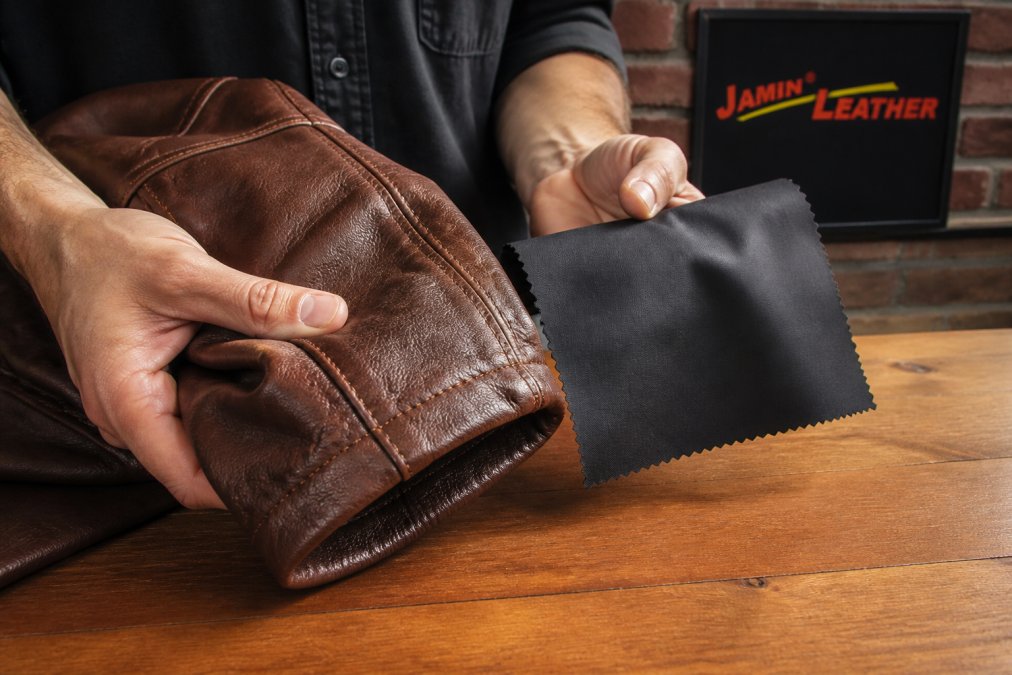
If an unfinished edge or backing is already visible, examine it without cutting or damaging the product. Different materials may reveal fibrous layers, fabric backing, or coatings. However, these characteristics are not always visible and may require expert interpretation.
4. Consider the Feel and Flexibility
Some genuine leathers feel soft and flexible, while others are firm or structured. Synthetic materials can have similar characteristics. Feel may offer a clue, but it cannot reliably confirm a product’s composition.
5. Use Smell Only as a Supporting Clue
Leather can have a recognizable scent, but tanning processes, finishes, and added fragrances can affect how both real and synthetic materials smell. Scent alone should never determine whether a product is genuine leather.
What to Avoid
Avoid burn tests, cutting the material, or applying water or chemicals to identify leather. These methods can damage the product and may not provide a reliable answer.
When in doubt, rely on detailed product information or ask the seller to confirm the material rather than making assumptions based on appearance.
Understanding Leather Types: Full Grain, Top Grain, and Split Leather
When shopping for genuine leather products, you may encounter terms such as full grain, top grain, and split leather. These describe differences in how animal hides are processed and used.
- Full-Grain Leather: Leather that retains its original grain surface without having that surface removed through corrective sanding or buffing.
- Top-Grain Leather: Leather made from the outer grain layer of the hide. It may retain its natural surface or undergo treatments to create a more uniform appearance.
- Split Leather: Leather produced from the lower layers of a hide after it has been divided. Split leather can be processed into products such as suede.
All three are forms of real leather. These terms provide information about the material’s construction, but they do not automatically determine the quality or durability of a finished product.
When identifying real leather, focus on understanding the material description rather than assuming one type is genuine and another is synthetic.
What Does Vegan Leather Mean?
Vegan leather is a term commonly used for leather-like materials made without animal hides. Many products labeled vegan leather use synthetic materials such as polyurethane (PU) or polyvinyl chloride (PVC), although other alternatives also exist.
The term “vegan leather” does not identify one specific material or guarantee particular qualities. If you’re comparing genuine leather with a vegan alternative, check the product’s material description to understand what it’s made from.
How to Tell Real Leather From Synthetic Leather
Knowing the difference between genuine and synthetic leather can help you make more informed decisions when shopping for jackets, vests, bags, and other accessories.
While genuine leather and synthetic alternatives may share similar appearances, their materials and construction are different. Checking product labels and detailed material descriptions is the most reliable place to start. Texture, smell, and flexibility may provide additional clues, but none of these observations can confirm a material’s composition on its own.
When in doubt, ask the retailer or manufacturer for more information before making a purchase.
Explore the leather apparel and accessories available at Jamin Leather® to find styles that suit your preferences.
Frequently Asked Questions
What is the symbol for fake leather?
There is no universal symbol, but the words on the tag matter more than any icon. Terms like polyurethane, PU, vinyl, PVC, and faux leather all point to synthetic material. If a label only says ‘genuine leather’ with no further description, that is a real leather claim, though it usually refers to a lower grade. When in doubt, check the product page for a full material composition rather than relying on a single word or symbol.
Is 100% leather the same as genuine leather?
Not necessarily. Leather labeling can describe material content without telling you the leather’s grade, construction, finish or overall quality. Terms such as full grain, top grain, split leather and bonded leather provide additional information about how the material is made. When comparing leather products, consider the complete product description rather than relying on a single term on the label.
Can you tell the difference between real leather and synthetic by touch?
Touch gives strong clues but is not definitive on its own. Real leather tends to feel supple, slightly warm, and it wrinkles into fine, irregular creases when you press it. Synthetic materials often feel cooler, smoother, and spring back with fewer creases. Because finishes and coatings vary by product, pair the touch test with a smell check and an edge inspection before you decide.
Does fake leather smell like real leather?
No. Real leather has an earthy, slightly sweet smell from the tanning process. Faux leather made from polyurethane or vinyl usually smells like plastic or chemicals, and the odor tends to sit on the surface rather than fade into the material. A burnt hair smell is sometimes used as an at-home test, but it requires burning a small sample, which can damage the item. Stick to sniffing the material at room temperature instead.
Sources and Further Reading
The information in this article is informed by established leather industry terminology and consumer guidance. For additional information about leather materials, labeling, and terminology, explore these resources:
- Federal Trade Commission (FTC) — Leather Guides: U.S. guidance on the labeling and marketing of leather and imitation leather products.
- Leather Working Group — Essential Leather Industry Terms: Explanations of terminology used to describe leather materials and processing.
- ISO 15115 — Leather Vocabulary: International terminology for leather and related materials.
These references provide background on material definitions and labeling. Appearance, texture, and smell alone should not be treated as definitive tests for identifying genuine leather.