













Last Updated: November 4, 2026
Quick Summary
A properly fitted motorcycle helmet that meets Federal Motor Vehicle Safety Standard (FMVSS) No. 218 is an essential piece of riding safety equipment. However, a helmet is only one part of a complete protective riding outfit.
- Helmet: Choose a properly fitted, DOT-compliant motorcycle helmet. Full-face designs provide additional facial coverage.
- Eye Protection: Use appropriate protective goggles or a face shield.
- Jacket and Pants: Choose clothing designed for motorcycle riding, considering its materials, construction, and available protective features.
- Gloves: Wear properly fitting, full-fingered motorcycle gloves.
- Boots: Choose sturdy riding footwear that covers the ankles.
- Visibility and Weather: Consider reflective materials, appropriate layers, and weather-resistant riding gear.
Protective equipment can help reduce certain injury risks, but no gear can guarantee protection in a crash.
Table of Contents
- Helmets and Eye Protection: The Head and Face Come First
- Jackets, Pants, Gloves and Boots: Protecting the Rest of Your Body
- Motorcycle Gear for Hot Weather, Rain and Low Light
- Sources and Further Reading
- Frequently Asked Questions
- Choosing the Right Motorcycle Safety Gear
Helmets and Eye Protection: The Head and Face Come First
A properly fitted motorcycle helmet is one of the most important pieces of riding safety equipment. In the United States, look for a helmet that meets Federal Motor Vehicle Safety Standard (FMVSS) No. 218, identified by the manufacturer’s DOT certification label.
Helmet coverage also matters. Full-face helmets include a chin guard, while half helmets leave more of the face exposed. Choose a helmet that fits snugly without uncomfortable pressure points, and always fasten the chin strap properly.
Eye protection is important, too. An appropriate face shield or protective goggles can help shield your eyes from wind, insects, and road debris. Look for clear, undamaged lenses suited to riding conditions.
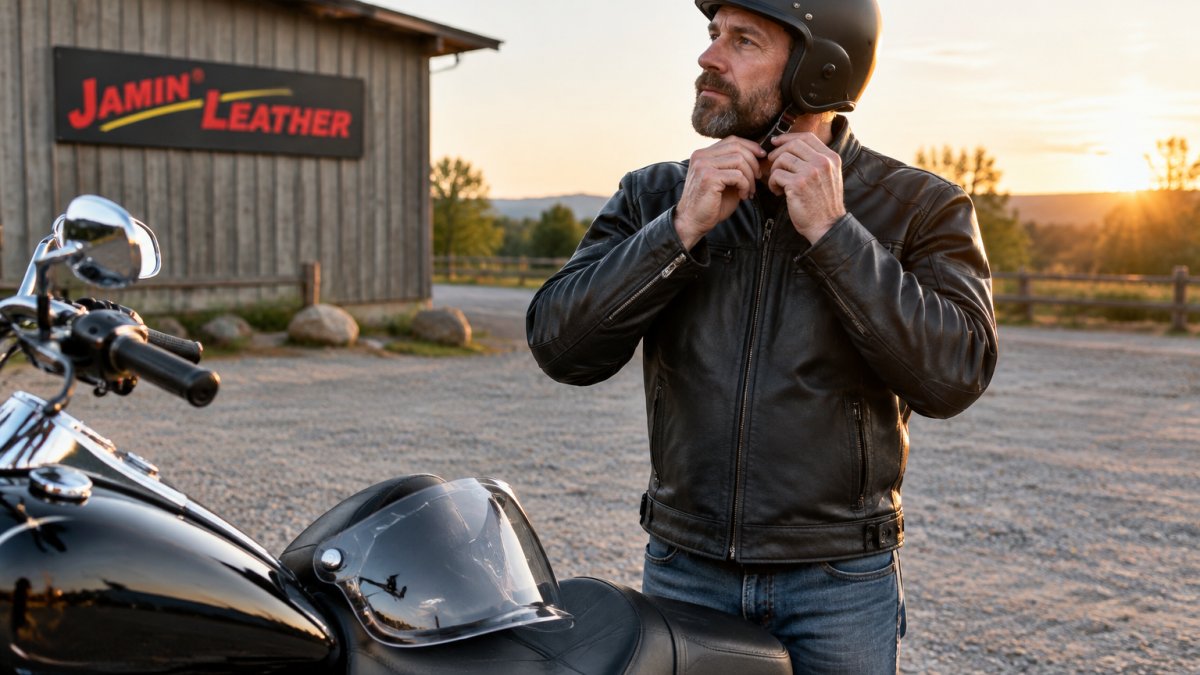
Jamin Leather® offers the D.O.T. Flat Black Half Helmet #H9770FK, which is advertised as DOT-compliant and features an adjustable Y-strap and quick-release clasp. Review the product’s sizing information and fit recommendations before purchasing.

Jackets, Pants, Gloves and Boots: Protecting the Rest of Your Body
Beyond a helmet and eye protection, motorcycle riders should consider protective clothing designed specifically for riding.
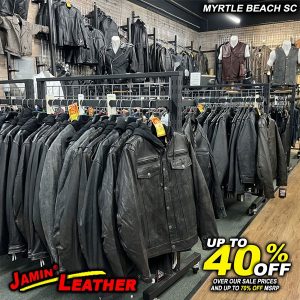
Motorcycle Jackets: Look for riding jackets made with abrasion-resistant materials and construction appropriate for motorcycle use. Some jackets include impact protectors, but features and protection levels vary by product.
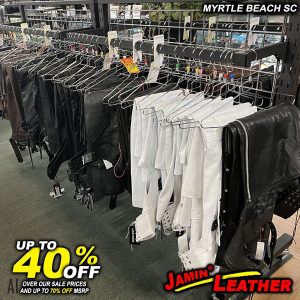
Riding Pants: Motorcycle-specific pants can provide additional coverage for the legs. Materials, protective reinforcements, and available impact protectors differ between styles.
Motorcycle Gloves: Full-fingered riding gloves help protect the hands from weather and road debris. Look for a secure fit that allows comfortable operation of the motorcycle’s controls.
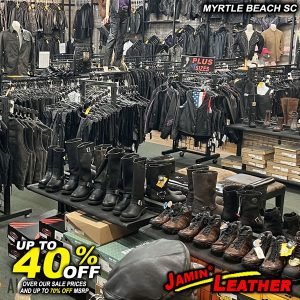
Riding Boots: Choose sturdy footwear that covers the ankles and provides a secure fit. Motorcycle-specific boots may offer additional protective features depending on their construction.
When shopping at Jamin Leather®, review individual product descriptions for materials, fit, and protective features rather than assuming all leather apparel offers the same level of protection.
Motorcycle Gear for Hot Weather, Rain and Low Light
Weather conditions can influence the protective gear riders choose. In warmer temperatures, motorcycle jackets designed with ventilation may provide better airflow while maintaining coverage. Always review each jacket’s construction and protective features before purchasing.
For wet weather, motorcycle-specific rain gear can help keep riders dry and comfortable. Choose items that fit properly and do not interfere with motorcycle controls.
Visibility matters, too. Bright colors and reflective materials can help make riders more noticeable to other road users, particularly in low-light conditions.
The Motorcycle Safety Foundation recommends choosing riding gear appropriate for the weather and visibility conditions.

Men’s Armor Filled Mesh Motorcycle Jacket #MC3629MAZK
Sources and Further Reading
The safety recommendations in this article are informed by guidance from the National Highway Traffic Safety Administration (NHTSA) and the Motorcycle Safety Foundation (MSF).
- NHTSA — Choose the Right Motorcycle Helmet: Information about proper helmet fit, helmet coverage, and the federal DOT helmet standard.
- MSF — Personal Protective Gear: Guidance on helmets, eye protection, jackets, pants, gloves, footwear, visibility, and weather-appropriate riding gear.
- MSF — If You Ride a Motorcycle: Additional recommendations for protective clothing, visibility, and responsible riding practices.
Protective equipment can help reduce certain injury risks, but no equipment can guarantee complete protection in a crash.
Frequently Asked Questions
What is the most important piece of motorcycle safety gear?
A properly fitted motorcycle helmet that meets Federal Motor Vehicle Safety Standard (FMVSS) No. 218 is one of the most important pieces of protective equipment. The National Highway Traffic Safety Administration (NHTSA) recommends choosing a compliant helmet that fits correctly. Other protective equipment, including eye protection, gloves, jackets, pants, and boots, also plays an important role.
Is a regular leather jacket enough for motorcycle riding?
Not necessarily. Motorcycle-specific jackets may include features designed for riding, such as abrasion-resistant construction and impact protectors. A regular fashion leather jacket should not be assumed to provide the same protection. Check the individual jacket’s materials, construction, and documented protective features before purchasing.
Choosing the Right Motorcycle Safety Gear
A properly fitted motorcycle helmet is an essential starting point, but protective riding gear doesn’t stop there. Eye protection, motorcycle-specific jackets, pants, gloves, and boots are all worth considering when preparing to ride.
Choose equipment based on proper fit, intended use, and documented protective features. Remember that no riding gear can eliminate every risk.
Explore Jamin Leather® for motorcycle apparel and accessories, and review individual product descriptions to find options that suit your riding needs.