













Last Updated: November 22, 2026
Quick Summary
Leather vest sizing starts with two numbers: your chest measurement and your stomach measurement. Measure both with a soft tape, then compare them to the size chart on the specific product listing, sizing to the larger of the two numbers. Always check the chart on the specific listing, since sizing varies by brand and product.
- Measure your chest at the fullest point and your stomach at or just below the navel.
- Body measurements describe you, while garment measurements describe the vest lying flat.
- Size to the largest of your chest and stomach numbers so the front closure stays flat.
- If you plan to layer over a hoodie or heavy flannel, measure while wearing that layer.
- Sit and reach forward as if holding handlebars to check the fit in the riding position.
Table of Contents
- How to Measure Vest Size at Home
- Reading a Leather Vest Size Chart
- How Should a Leather Vest Fit?
- Motorcycle Vest Fit for Riding
- Sizing for Layers, Seasons, and Different Body Shapes
- When You Fall Between Sizes or Have a Larger Stomach Than Chest
- Shop Jamin Leather Vests With Confidence
- Frequently Asked Questions
How to Measure Vest Size at Home
Leather vest sizing starts with two numbers: your chest measurement and your stomach measurement. Get those right, and most of the work is done. Jamin Leather® has been selling leather apparel since 1979, and the same rule holds today: measure the body, not the old vest in your closet.
You need a soft measuring tape, a mirror, and a friend if possible. Stand straight, breathe normally, and keep the tape level all the way around. Don’t pull it tight.
Here’s the order that works:
- Measure chest first, then stomach
- Write both numbers down before moving on
- Measure twice, and use the larger number if they differ
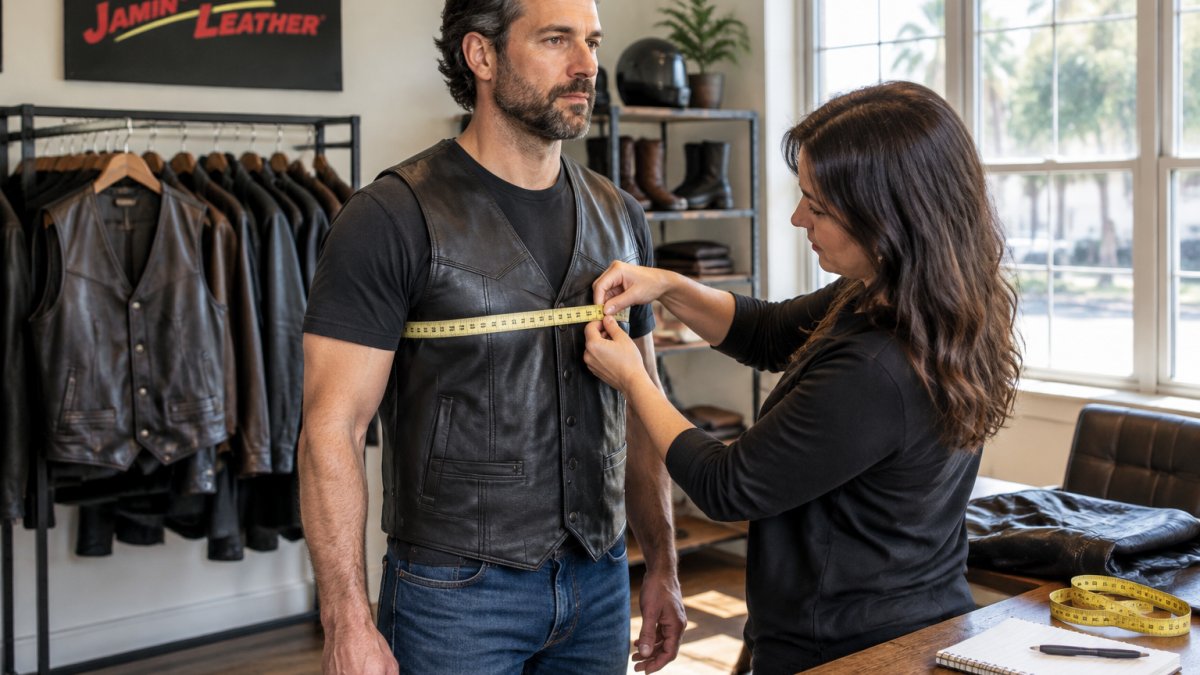
Measuring the Chest and Upper Chest
Chest measurement is the tape around the fullest part of your chest, usually right across the nipple line.
For upper chest, measure just below the collarbone and above the fullest point. Some riders use this number when a vest runs narrow through the shoulders.
Stand relaxed. Flexing or puffing up your chest adds inches that won’t be there on the bike.
Measuring the Stomach and Belly
Stomach measurement is the tape around the fullest part of your belly, usually at or just below the navel. Don’t suck in. Don’t measure over a thick belt or bulky buckle.
This number matters more than most people expect. A vest that fits the chest but strains across the stomach will gap at the bottom or pull at the zipper.
Reading a Leather Vest Size Chart
A leather vest size chart converts body measurements into lettered sizes like small, medium, and large, or into numbered sizes like 38, 40, and 42. Read the chart by your chest and stomach numbers, not by the size tag on a jacket you already own.
Two kinds of numbers appear on most charts:
- Body measurements: what the chart expects your body to measure
- Garment measurements: what the vest itself measures flat
Mixing these up is the most common sizing mistake. A 44-inch garment measurement is not made for a 44-inch chest. It includes room to move.
Body Measurements vs. Garment Measurements
Body measurements describe you. Garment measurements describe the vest lying flat, usually measured across the chest from armpit to armpit and doubled.
The gap between the two is called ease, the extra room built into a garment so you can move, breathe, and layer.
Here is a worked example. Suppose your chest measures 42 inches and your stomach measures 44 inches.
A Between-Size Decision Framework
Falling between sizes is normal, and the right call depends on three things: your largest body measurement, your fit preference, and whether you plan to layer. Work through these questions in order.
- Which measurement is largest? Size to the largest of your chest and stomach numbers. A vest that fits the chest but strains at the belly will gap at the bottom.
- How do you want it to feel? A snug preference points to your chart size if the range covers your largest measurement. A relaxed preference points one size up.
- Will you layer? If you plan to wear the vest over a hoodie or heavy flannel, measure while wearing that layer or move up a size.
- Does the cut adjust? Side straps or side lacing let you fine-tune a vest that sits between sizes, which is often more reliable than guessing.
If your measurements land at the top of one range and the bottom of the next, the larger size is usually the safer starting point for a riding cut, and the smaller size is usually fine for a close fashion fit.
For a step-by-step walkthrough of measuring thigh, waist, and hips, the leather chaps sizing guide covers the same method in more detail.
How Should a Leather Vest Fit?
A leather vest should fit close to the body without pulling, straining, or gaping. The front should close cleanly with no wide V of daylight at the bottom. You should be able to slide a hand flat under the chest panel, but not a fist.
Fit is personal. Some riders want a vest that hugs the torso. Others want room for a hoodie underneath. Neither is wrong, but the choice changes your size.
Snug, Regular, and Relaxed Fits
Three fit preferences cover most shoppers:
| Fit | How it feels | Best for | Sizing move |
|---|---|---|---|
| Snug | Close to the body, minimal gap | Fashion wear, warm weather | Order your chart size |
| Regular | Some room at the chest and waist | Everyday riding, casual wear | Order your chart size |
| Relaxed | Noticeable room for layers | Cold weather, layering | Consider one size up |
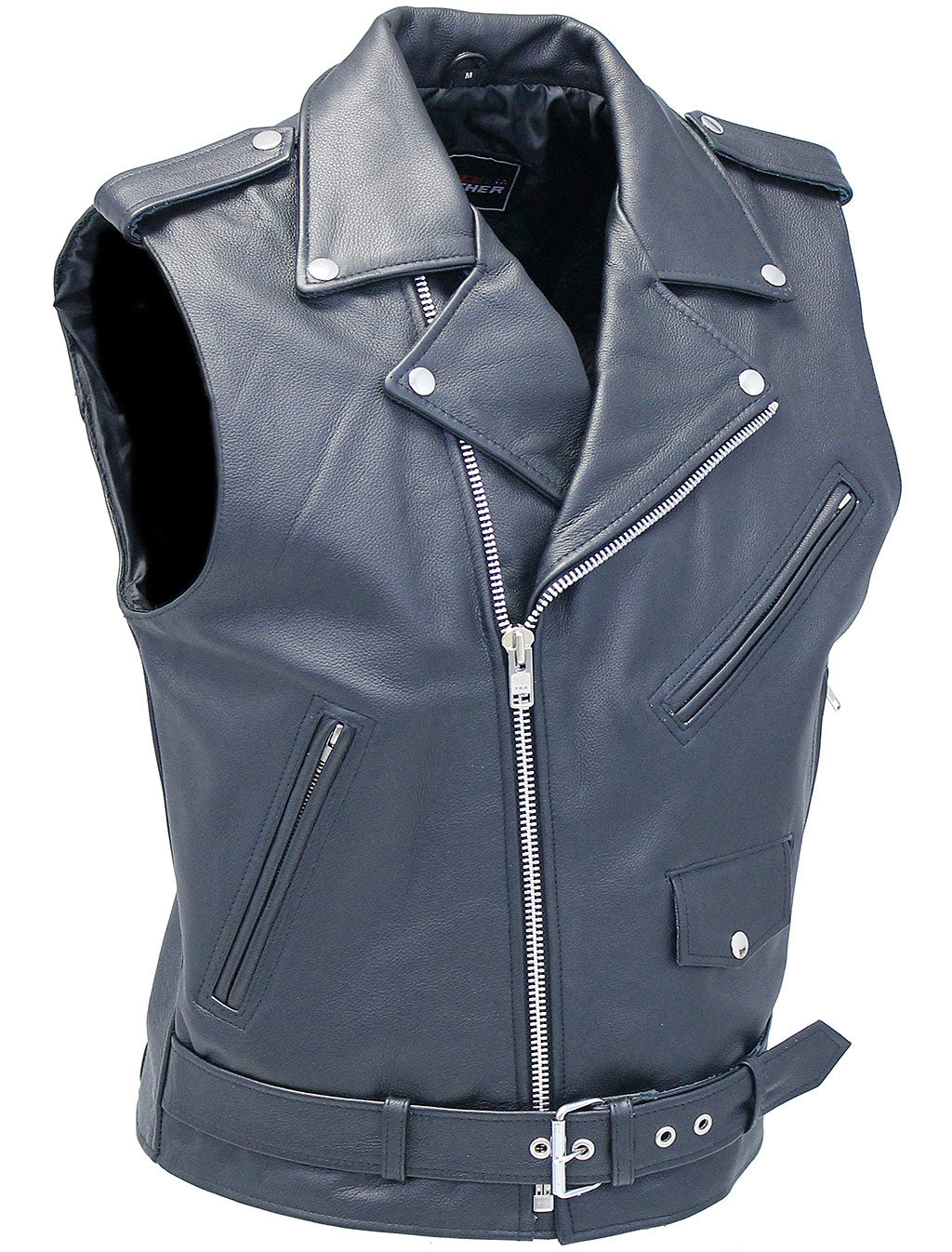
Snug doesn’t mean tight. If the zipper pulls or the armholes cut into your shoulders, the vest is too small no matter what the tag says. A classic black leather motorcycle vest with concealed pockets shows how a riding cut sits on the body, which helps you judge the look you want before ordering.
Checking Fit With the Vest Closed
Close the vest completely and check these points:
- Front closure: lies flat, no pulling or gaping between buttons or along the zipper
- Chest: fabric sits smooth, no strain lines radiating from the closure
- Armholes: room to raise your arms without the vest riding up
Try it over the shirt you’ll wear most. Then try it over a heavier layer if you plan to ride in cold weather.
Motorcycle Vest Fit for Riding
Motorcycle vest fit adds one more test: the riding position. A vest that feels fine standing in front of a mirror can pull across the back once you’re seated with your arms forward on the bars.
Sit in a chair and reach forward as if holding handlebars. Check the shoulders and upper back.
Club-style vests often use a straighter cut with a one-piece back, which some riders prefer for patch placement. Others want a side-lace or side-strap adjustment that lets them fine-tune the fit.
Fit Checks in the Seated and Riding Position
Run through this list before you commit:
- Sit and reach forward. Does the back pull tight?
- Twist your torso. Does the vest stay put or ride up?
- Raise both arms. Do the armholes bind?
If any check fails, the vest is too small or the cut doesn’t suit your build. A different size or style usually solves it.
Sizing for Layers, Seasons, and Different Body Shapes
Layering changes your effective measurements. A thick flannel or a hoodie can add noticeable bulk at the chest and stomach. If you plan to wear the vest over layers, measure while wearing the heaviest layer you’d realistically use, or size up.
Summer riders often want a closer fit over a t-shirt; winter riders want room. One vest rarely does both well, which is why some riders own two.
Testing Fit in the Seated and Riding Position
If any check fails, the vest is too small or the cut doesn’t suit your build. A different size or a cut with more room through the torso usually solves it. Club-style vests often use a straighter cut with a one-piece back, while side-lace or side-strap styles let you fine-tune the fit. Neither style is better, but the cut changes how the vest sits when you’re hunched forward.
Women’s, Unisex, and Nonstandard Body Shapes
Most sizing charts are built around a standard men’s torso, which leaves many shoppers guessing. A long body premium buffalo leather vest for women shows how a longer cut changes the fit through the torso and hip.
If your chest and stomach measurements differ widely, or your shoulders are much broader or narrower than the chart assumes, treat the largest measurement as your anchor and use an adjustable cut to take up the slack elsewhere.
When You Fall Between Sizes or Have a Larger Stomach Than Chest
If your stomach is bigger than your chest, size to the stomach, not the chest. A vest that fits the chest but strains at the belly will gap at the bottom.
Options when you’re between sizes:
- Size up if you plan to layer or want a relaxed fit
- Stay at your chart size if you want a snug fit and the chart range covers you
- Choose an adjustable cut with side straps or side lacing
A triple side strap leather motorcycle vest lets you tighten or loosen the sides, which helps when your chest and stomach don’t match a single size. Leather vest extenders add length to the front closure of a vest that’s close but a little tight.
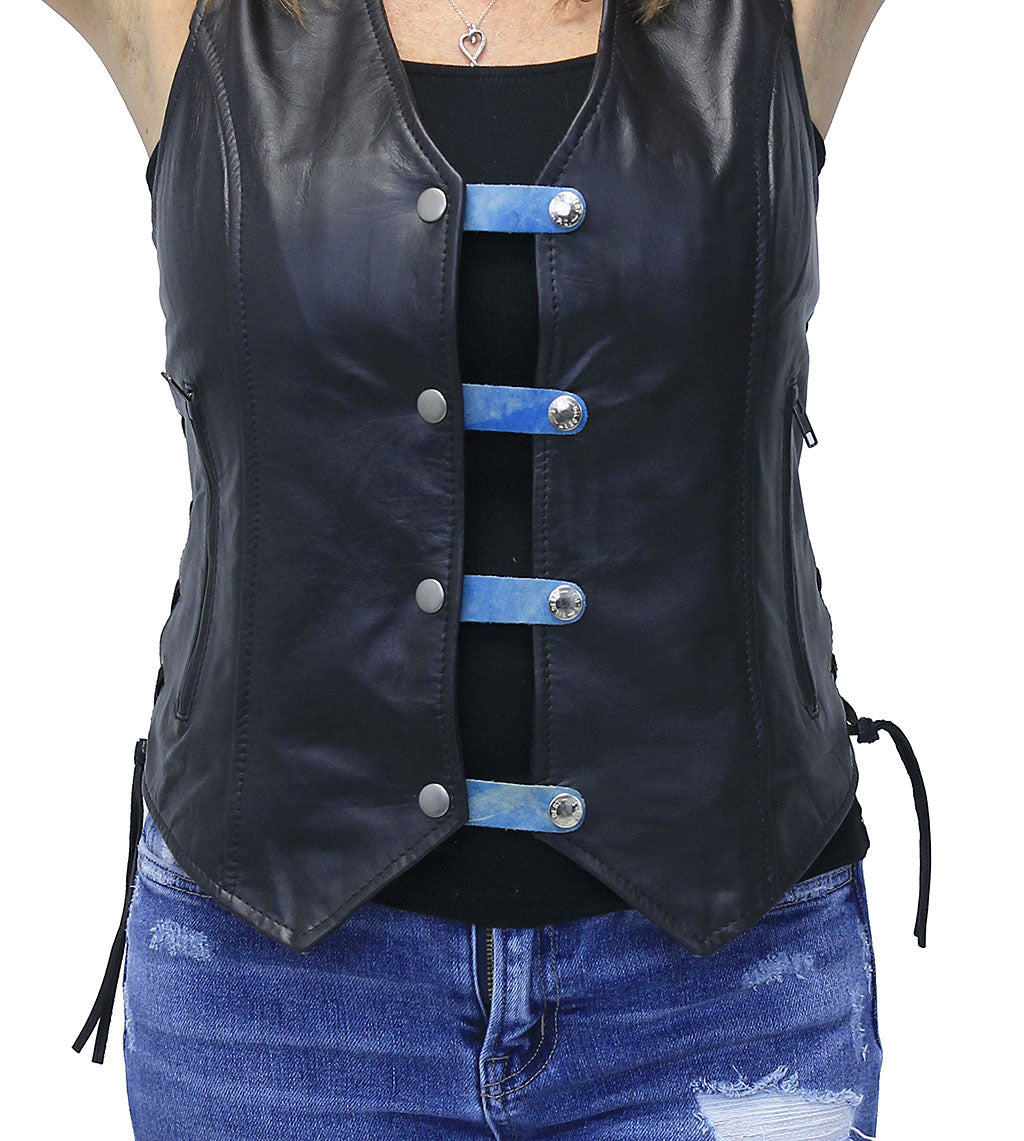
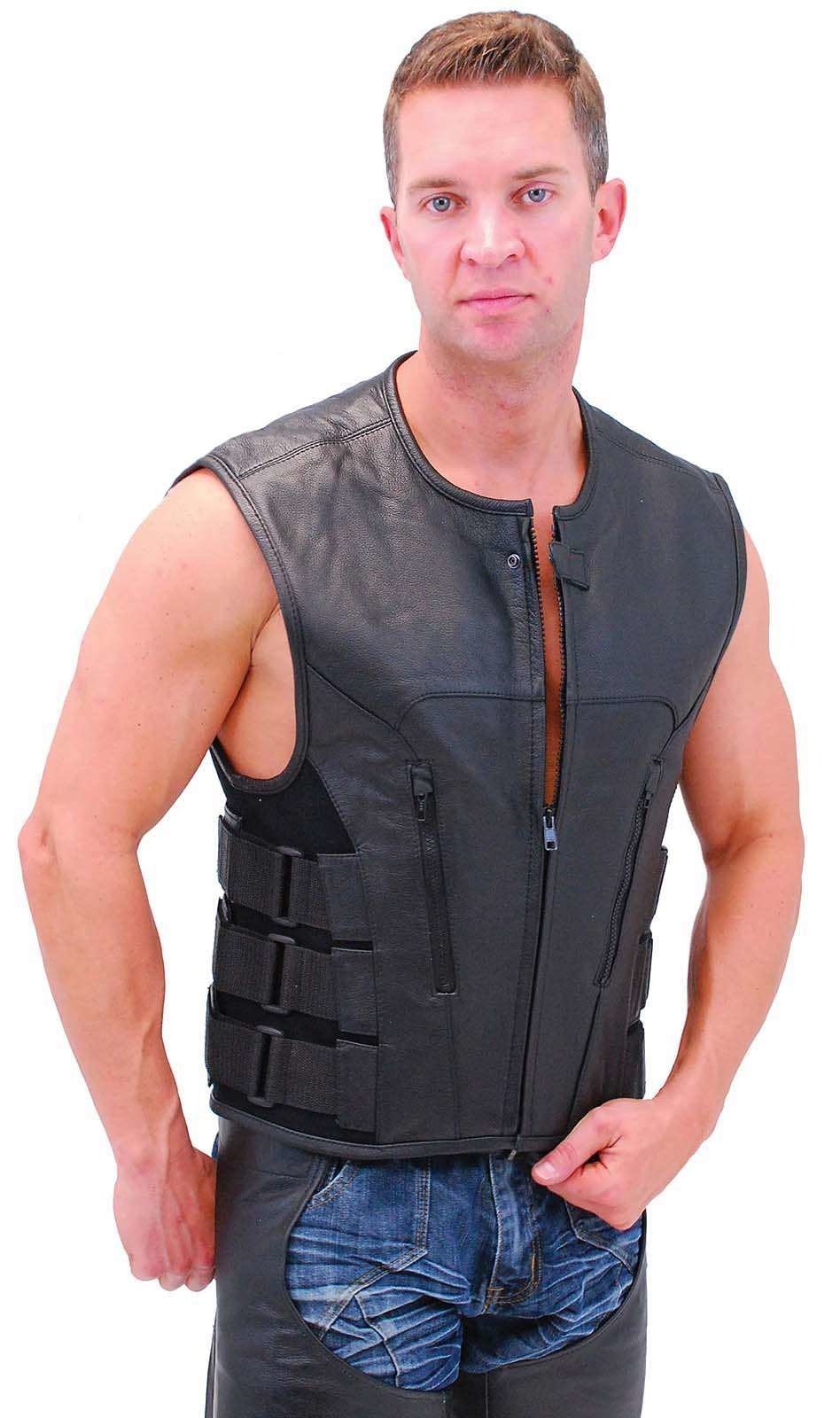
Watch out: sizing down to chase a snug look is the fastest way to end up with a vest that never gets worn. Leather has some give, but it won’t stretch enough to fix a size that’s genuinely too small.
Shop Jamin Leather Vests With Confidence
Getting leather vest sizing right comes down to two measurements, one chart, and an honest look at how you’ll wear the vest. Measure your chest and stomach, compare both to the chart on the specific product page, and test the fit closed and seated before you commit.
Jamin Leather® has helped riders and casual wearers find the right fit since 1979. The catalog includes genuine leather vests for men and women, including club-style vests with concealed pockets and side-lace styles.
Shop Jamin Leather® and measure once, order once, and ride in a vest that fits the way it should.
Fit problems usually trace back to one number: the stomach measurement. Measure both, compare both, and let the larger one decide the size.
Frequently Asked Questions
Does leather run big or small?
It depends on the garment and the brand, so there is no single answer. Leather vest sizing varies by cut, leather thickness, and whether the vest is designed for fashion or riding. Some leather vests feel snug at first and loosen slightly as the leather breaks in, while others are cut generously from the start. Always check the specific product’s size chart and measure your chest and stomach before ordering rather than assuming your usual shirt size will translate.
Should I use my shirt size to choose a leather vest?
Your shirt size is a rough starting point, not a reliable guide. Shirt sizing follows general body measurements, while leather vest sizing depends on the cut, the closure style, and how much room you want for layers. A medium shirt does not guarantee a medium vest fits the same way. Take fresh chest and stomach measurements, compare them to the leather vest size chart for that product, and factor in whether you plan to wear it over a t-shirt or a heavier shirt.
Can you wear layers under a leather vest?
Yes, but the layer affects the size you need. A vest worn over a t-shirt can follow your body measurements closely, while one worn over a hoodie or flannel needs extra ease in the chest and stomach. If you plan to layer across seasons, size for the thickest layer you expect to wear and check the fit with that layer on. A vest that fits well over a t-shirt may feel tight over a heavy flannel, so measure with the layer in mind.
What should I do if my measurements fall between two sizes?
When your chest and stomach measurements land between two sizes, decide based on fit preference and layering. Size up if you want room for layers, prefer a relaxed fit, or your stomach measurement is larger than your chest. Size down if you want a snug fit and plan to wear the vest over light clothing. Check the product’s size chart for how that specific vest is cut, and remember that leather can loosen slightly as it breaks in.