













Last Updated: November 24, 2026
Quick Summary
You measure for a motorcycle jacket by taking four body measurements with a soft tape measure: chest at the fullest point, natural waist, sleeve length from shoulder to wrist, and shoulder width across the back. Compare those numbers to the size chart for the exact motorcycle jacket you want, not to a generic chart.
- Measure over a thin base layer, keep the tape snug but not tight, and stand naturally.
- Sleeve length should be taken with the arm slightly bent, the way it sits on the handlebars.
- Size charts vary by brand and cut, so read the chart for the specific jacket you plan to buy.
- Body-measurement charts compare to your numbers; garment-measurement charts compare to a jacket you own.
- In riding position, sleeves should still cover your wrists and the hem should stay near your waistband.
Table of Contents
- How Do You Measure for a Motorcycle Jacket?
- What You’ll Need Before You Start
- How to Measure Chest for a Jacket
- Waist, Sleeve, and Shoulder Measurements
- Reading a Motorcycle Jacket Size Chart
- How Should a Motorcycle Jacket Fit?
- Motorcycle Jacket Size Guide for Women
- Mistakes That Throw Off Your Measurements
- Find Your Size at Jamin Leather®
- Frequently Asked Questions
How Do You Measure for a Motorcycle Jacket?
You measure for a motorcycle jacket by taking four body measurements with a soft tape measure: chest at the fullest point, natural waist, sleeve length from shoulder to wrist, and shoulder width across the back. Compare those numbers to the size chart for the exact jacket you want, not to a generic chart.
That is the short answer. The longer answer matters more, because a jacket that measures right on paper can still ride up, bind at the shoulders, or leave your wrists hanging out in the wind.
This guide walks through each measurement step by step, then covers how to read a size chart, how a jacket should actually fit, and what to do when you land between sizes. Below, you’ll find the full measuring sequence plus the fit checks most riders skip.
What You’ll Need Before You Start
Gather three things before you measure anything.
- A soft tape measure. The flexible kind used for sewing. A metal tape measure from the garage will not follow the curve of your body.
- A helper. Chest and shoulder width are hard to read on yourself. A second person gets cleaner numbers.
- The right shirt. Wear a thin base layer or the shirt you normally ride in. Bulk changes the numbers.
Stand naturally with arms relaxed at your sides. Do not puff out your chest or suck in your stomach. Measure the body you have on a normal riding day.
CDC guidance on measuring body dimensions accurately
How to Measure Chest for a Jacket
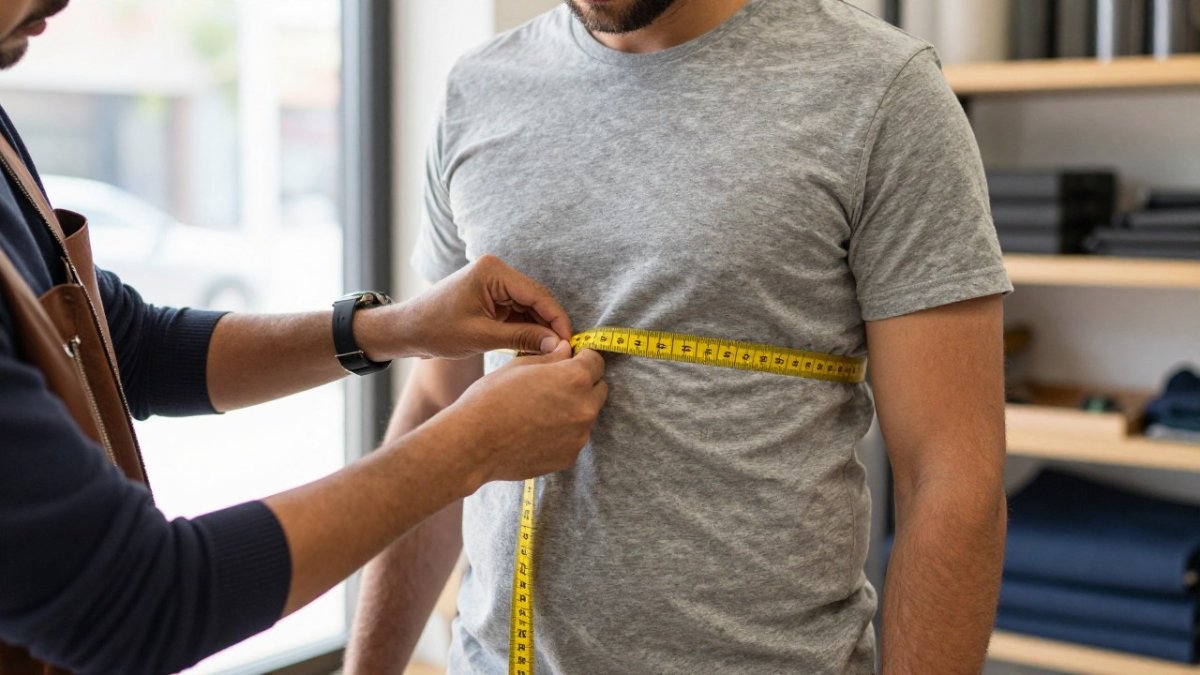
Wrap the tape around the fullest part of your chest, keep it level with the floor, and read the number where the tape meets itself. Keep the tape snug but not tight. You should be able to slide one finger under it.
Where the Tape Should Sit
The tape runs under the arms and across the shoulder blades in back. In front, it crosses the fullest part of the chest. Check in a mirror or have your helper confirm the tape is level all the way around. A tape that dips in back adds phantom inches.
Breathe out normally and read the measurement. Record it in inches.
Waist, Sleeve, and Shoulder Measurements
Three more numbers complete the picture. Each one catches a different fit problem.
Waist or belly measurement. Wrap the tape around your natural waist, roughly at the navel or where your belt sits. Keep it level. This number matters most for shorter jacket cuts and for riders who carry weight in the middle.
Sleeve length. Stand with your arm slightly bent, the way it sits on the handlebars. Have your helper measure from the edge of your shoulder, over the elbow, down to the wrist bone. A straight-arm measurement runs short once you reach for the grips.
Shoulder width. Measure across the back from the outer edge of one shoulder to the other, at the point where a shoulder seam would sit. This is the number that decides whether a jacket binds when you reach forward.
Readers measuring their lower body for riding gear will want this companion guide to how to measure for motorcycle chaps.
Reading a Motorcycle Jacket Size Chart
A motorcycle jacket size chart lists numbers next to jacket sizes, and the numbers on that chart belong to that specific product.
The first thing to sort out is what kind of numbers the chart is showing you. Charts generally fall into two types, and mixing them up is the most common reason riders order the wrong size.
- Body measurements. The chart tells you the chest, waist, and sleeve numbers of the person the jacket is designed to fit. You compare your own measurements directly to these numbers.
- Garment measurements. The chart tells you the physical dimensions of the jacket itself, laid flat or measured around. You compare these to a jacket you already own that fits well, or you add your desired ease to your body numbers.
Most listings state which type they use, often in a note above or below the table. If the listing does not say, look at the numbers themselves.
Here is the part most riders miss. A leather jacket’s physical measurement is often larger than the size label. Some listings note that the garment measures several inches wider across the chest than the stated size, which leaves room for a shirt and for movement.
So compare your body measurements to the chart’s body measurements, then read any fit notes on the product page. When a listing says the jacket runs small or fits trim, believe it.
Watch out: do not compare a garment-measurement chart to your bare body numbers. That mismatch is how riders end up ordering a jacket two sizes too small.
Tall riders reading a size chart may need extra guidance on where length lands, so this breakdown of motorcycle jacket fit for tall riders covers the details.
How Should a Motorcycle Jacket Fit?
A motorcycle jacket should fit snug through the chest and shoulders with room to move, and the sleeves should reach the wrist when your arms are forward on the grips.
Standing in front of a mirror tells you only part of the story. Fit can change once your arms come forward and your torso leans, so test it in a riding position.
Check reach to the bars. Sit on your motorcycle, or sit in a chair and reach both hands forward as if holding the grips.
Check sleeve coverage at full extension. With your arms forward, the cuffs should still cover your wrists.
Check back coverage. The hem should stay near your waistband when you lean forward.
Check armor alignment if the jacket has it. Features such as armor vary by product, so check the specific listing.
Check the closure over your normal layer. Zip or snap the jacket closed over the shirt or liner you normally ride in.
- Sit or stand and reach both hands forward as if holding bars
- Check that the sleeves still cover your wrists at full reach
- Check that the jacket hem stays near your waistband when you lean
- Confirm any armor pockets sit over the joints in riding position
- Roll your shoulders and confirm the back does not pull tight
- Zip it closed over your normal riding layer
If the jacket fails any of these, the size or the cut is wrong for you.
Fit also depends on construction and cut. Jackets in different materials and cuts can drape and fit differently, so the product page notes matter as much as the chart.
For a deeper look at how tight or loose a jacket should sit, this guide answers are motorcycle jackets supposed to be tight.
Motorcycle Jacket Size Guide for Women
Women’s motorcycle jackets are cut on separate patterns, so a women’s size chart will not match a men’s chart number for number. Measure the same four points: chest at the fullest part, natural waist, sleeve from shoulder to wrist, and shoulder width.
Two practical notes. First, women’s jackets often run small relative to the label, and some listings say so directly. Read the product page. Second, if you plan to wear layers or a back protector, measure over that layer or size accordingly.
For a wider view of what to wear beyond the jacket, this guide to motorcycle safety gear for women covers the full setup.
Mistakes That Throw Off Your Measurements
Most bad measurements come from five habits. Each one is easy to fix.
- Measuring over a bulky sweatshirt. Measure over a thin layer, then add room for layers in the fit, not the tape.
- Letting the tape sag in back. Have a helper check the level from behind.
- Pulling the tape tight. Snug, not squeezed. One finger should fit underneath.
- Measuring a straight arm for sleeve length. Bend the arm slightly, as it sits on the bars.
- Rounding up “just in case.” Use the real number and let the size chart do its job.
Beginners who want extra fit guidance after measuring will get more from these motorcycle jacket fit tips for beginners.
Find Your Size at Jamin Leather®
Jamin Leather® has been in the leather business since 1979, and the size charts on each product page are the reference to use. The catalog runs from standard sizes up through extended and tall cuts, so more riders can find a chart that matches their measurements.
A few options worth comparing against your numbers:
| Jacket | Sizes Available | Notable Fit Details |
|---|---|---|
| Classic Leather Motorcycle Jacket for Men #M110EC | 36 to 74 | Bi-swing shoulders, adjustable belt, zip cuffs |
| Men’s Ultra Premium Leather Concealed Pockets Motorcycle Jacket #M208GZK | S to 5X | Bi-swing shoulders, removable full belt |
| Big & Tall Leather Motorcycle Jacket #M727ZT | 42T to 66T | Cut 2 to 3 inches longer, side lacing |
| Women’s Hot Weather Riding Jacket with Mesh & Armor #LC351ZVGAK | S to 5X | Sizes run small, adjustable side and bicep straps |
Measure once, write the numbers down, and check them against the chart for the jacket you actually want. That is the whole method.
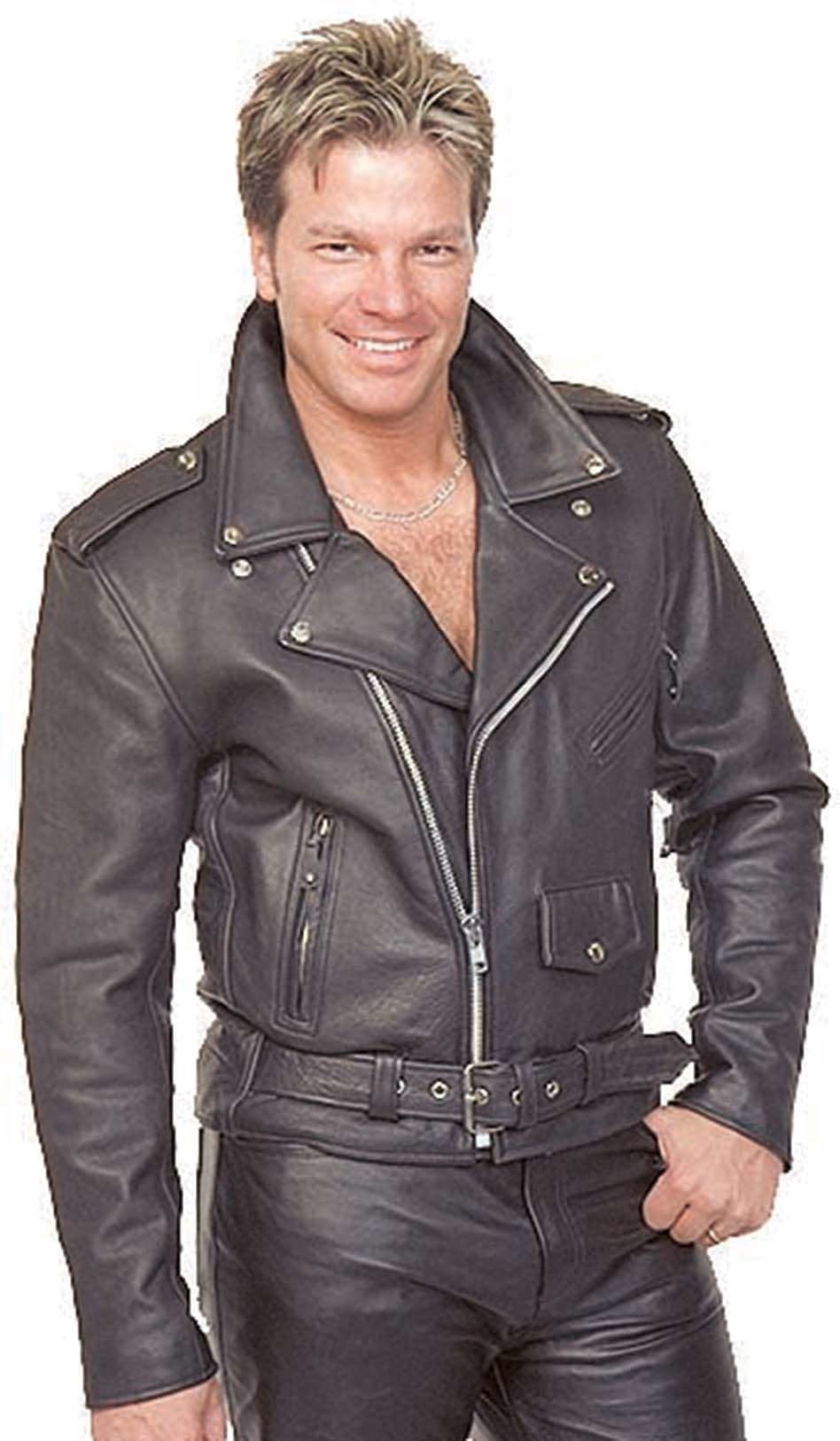
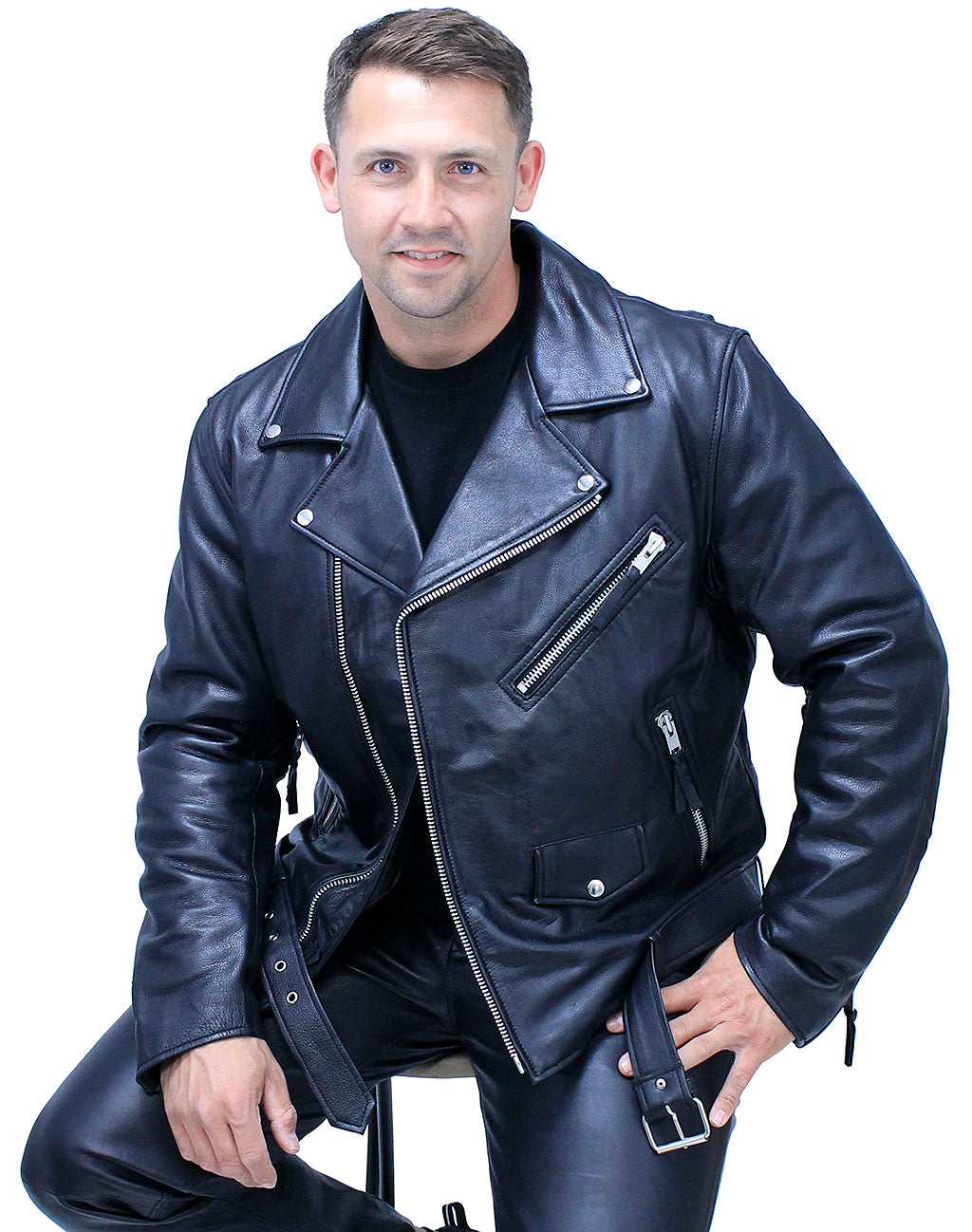
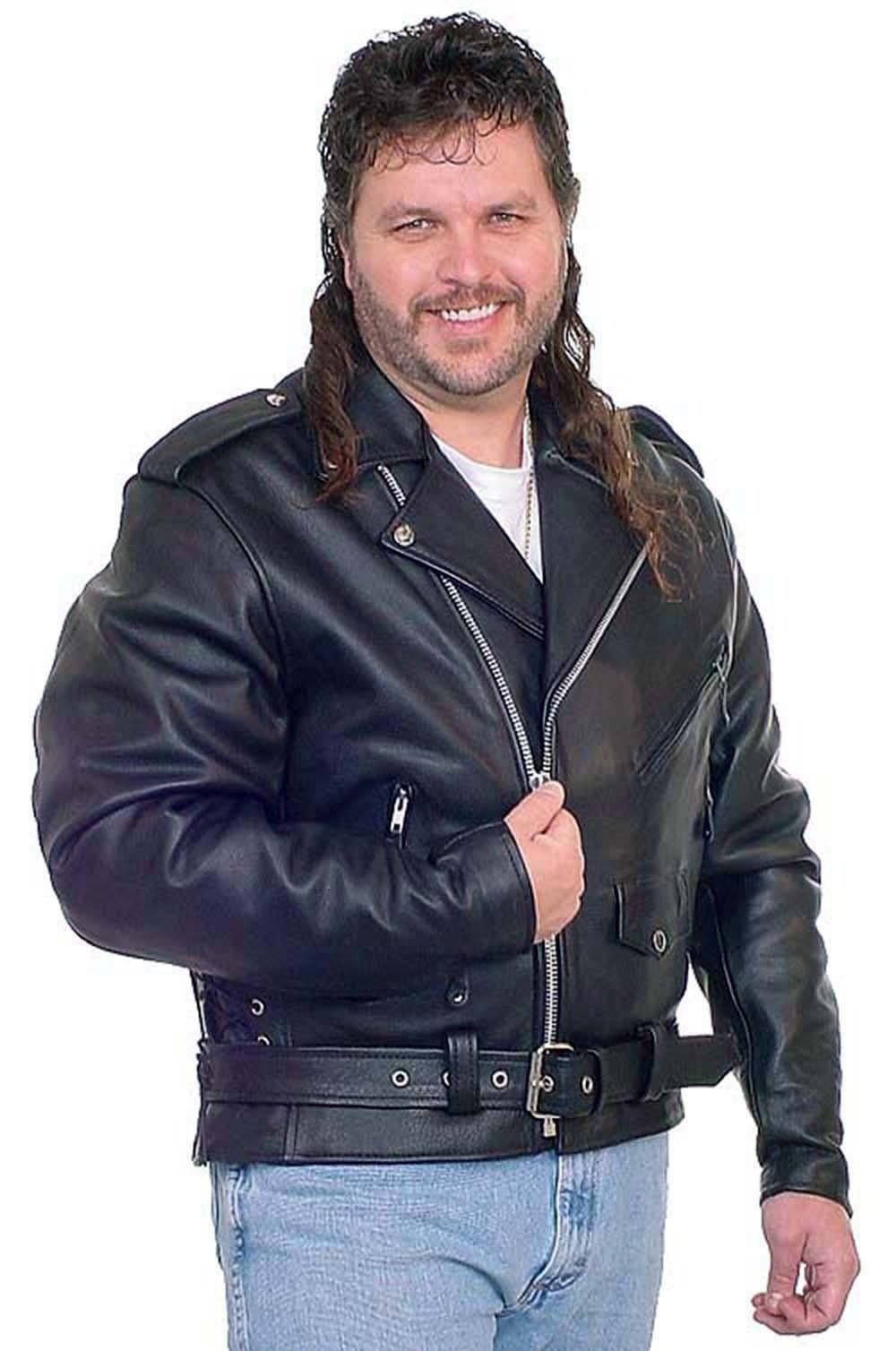
Getting the measurements right is the difference between a jacket you reach for every ride and one that hangs in the closet. Jamin Leather® offers genuine leather motorcycle jackets in several size ranges, including big and tall options, with features such as bi-swing shoulders and adjustable belts on select styles. Start with the Classic Leather Motorcycle Jacket for Men #M110EC, check your chest and sleeve numbers against its chart, and ride in a jacket built to fit.
Frequently Asked Questions
How do I know what size motorcycle jacket to get?
Start with your chest measurement taken around the fullest part of the chest, then compare it to the motorcycle jacket size chart for the specific jacket you want. Check waist, sleeve, and shoulder numbers too, since a jacket that matches on chest alone can still pull across the back or leave your wrists exposed. Sizing varies by brand and by jacket cut, so always read the chart for that product rather than assuming your usual clothing size carries over.
Should you size up for a motorcycle jacket?
Size up when you plan to wear thick layers underneath or when your measurements land at the top of a size range. Leather jackets are cut to allow room for movement, and some listings note that the garment measures larger than the tagged size, so read the product details before deciding. If you fall between sizes, going up gives you room for a base layer and a mid layer without restricting reach to the bars.
What should I do if my measurements fall between two jacket sizes?
Look at how you ride and what you wear underneath. Riders who layer heavily or ride in cold weather usually do better with the larger size, while warm-weather riders in a single base layer may prefer the smaller one. Check the product page for notes on how that jacket is cut, and confirm the return or exchange terms before ordering so a wrong guess does not leave you stuck with a jacket you cannot wear.
How should a motorcycle jacket fit on a woman?
A women’s motorcycle jacket should feel snug through the chest and shoulders without pinching, with sleeves long enough to cover your wrists when your arms are extended toward the bars. Some women’s jackets run small, and certain listings say so, so measure yourself rather than relying on your dress size. Check the specific size guide for the jacket, since women’s cuts vary more between brands than men’s do.