













Last Updated: November 28, 2026
Quick Summary
To condition a leather jacket, clean off surface dust first, let it dry completely, then apply a dime-sized dot of leather-safe conditioner with a soft cloth in thin, circular layers. Buff off any excess and air dry away from heat and sunlight. The whole job takes about 20 to 30 minutes plus drying time.
- Test conditioner on a hidden area like inside the hem and wait 24 hours before applying it widely.
- Never condition a damp jacket, and always air dry away from radiators, heaters, and hair dryers.
- Suede and nubuck should never get a standard cream, oil, or wax conditioner.
- Check the jacket every few months and condition only when the leather feels dry or stiff.
- A new leather jacket usually does not need conditioning right away if it feels soft.
Table of Contents
- How to Condition a Leather Jacket
- How to Condition a Leather Jacket at Home
- Choosing the Best Leather Jacket Conditioner
- Should You Condition a New Leather Jacket?
- How Often to Condition a Leather Jacket
- Troubleshooting Common Conditioning Mistakes
- Shop Jamin Leather® for Quality Leather Care
- Frequently Asked Questions
How to Condition a Leather Jacket
Learning how to condition a leather jacket is the single best way to keep it soft, supple, and free of cracks.
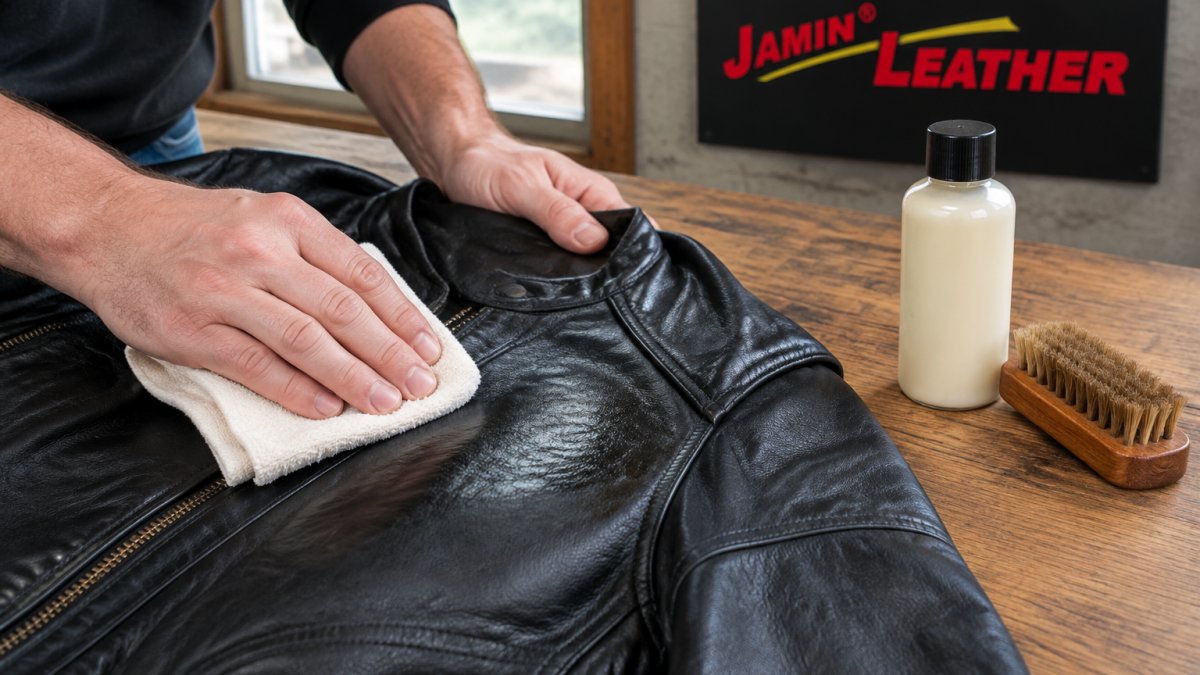
Leather is skin. It dries out, just like skin does. When the natural oils fade, the fibers stiffen and small cracks can form. Conditioning puts those oils back.
Below, the exact supplies to gather and a step-by-step process anyone can follow at home.
Gather Your Supplies
Start with the right tools before touching the jacket. Each item has a job, and the wrong tool can do more harm than good.
- A leather-safe conditioner made for the jacket’s finish
- A leather cleaner or mild soap for surface dirt
- Two soft cloths, such as microfiber, plus a washcloth
- A soft-bristled brush for seams and crevices
Skip paper towels, rough rags, and anything abrasive. They can scratch smooth leather.
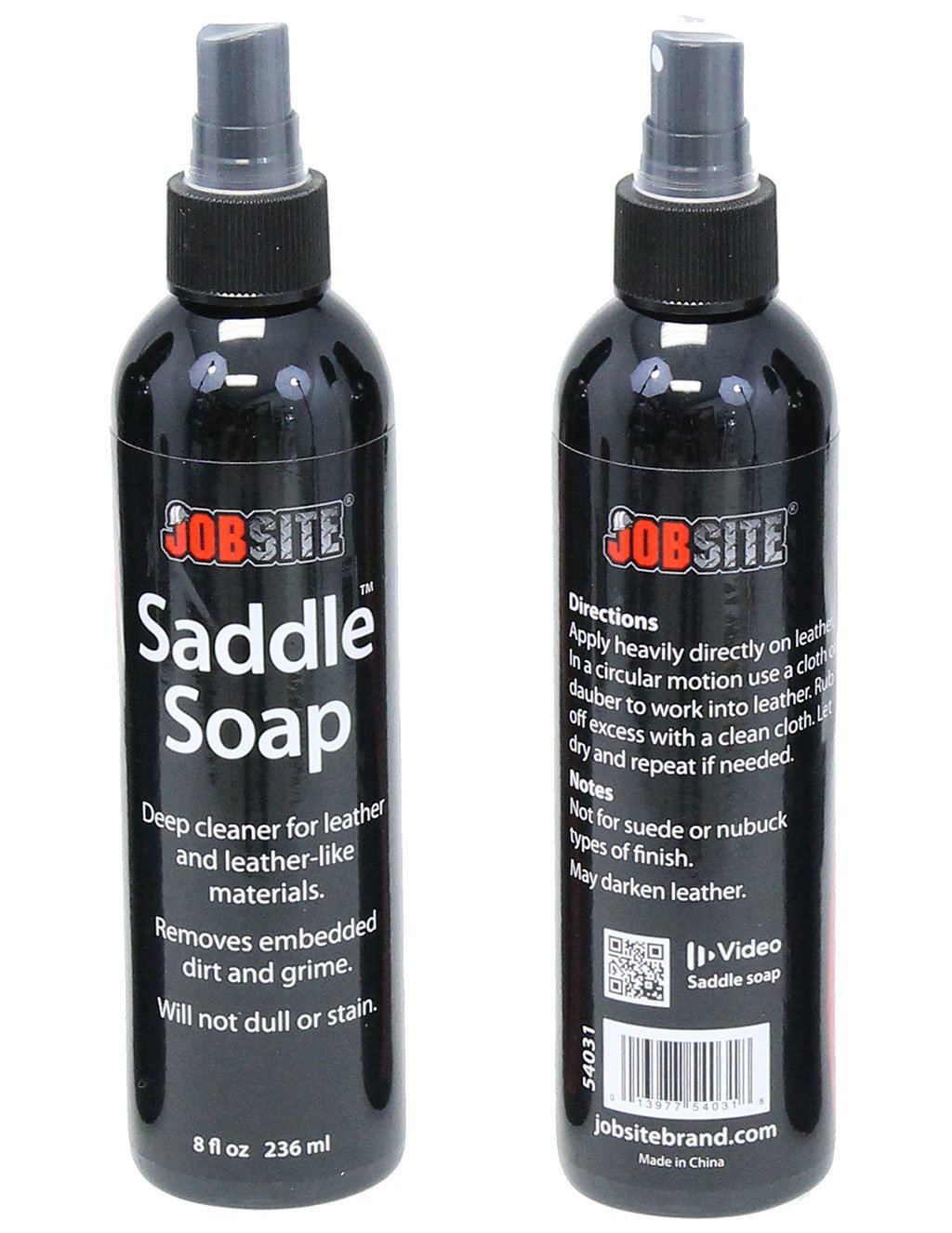
A reader building a care kit may want to pick up a liquid saddle soap bottle that cleans and conditions in one step.
Step-by-Step Conditioning Process
The whole job takes about 20 to 30 minutes, plus drying time. Work in a space with good ventilation and keep the jacket away from direct sunlight and heat.
- Clear the work area. Lay the jacket flat on a clean towel or hang it on a wide, padded hanger.
- Remove surface dust. Wipe the whole jacket with a dry cloth. Pay attention to the collar, cuffs, and seams.
- Clean lightly soiled leather. Dampen a cloth with warm water and a little mild soap. Wipe gently, then blot away excess moisture with a dry cloth.
- Let it dry completely. Air dry away from sunlight and heat sources.
- Test a hidden area. Apply a small amount of conditioner inside the hem or behind a pocket flap. Wait 24 hours and check for color change or residue.
- Apply a small amount. Squeeze a dime-sized dot onto a soft cloth or sponge. Less is more.
- Work in a circular motion. Spread the conditioner in thin, even layers across one panel at a time.
- Wipe away excess. Buff off any product the leather does not absorb.
- Air dry again. Hang the jacket with good airflow and let it rest before wearing.
Watch out: applying too much product at once leaves a sticky residue that attracts dirt and can darken the finish unevenly. Build up thin coats instead.
How to Condition a Leather Jacket at Home
Conditioning a leather jacket at home needs no special equipment and no trip to a professional.
Keep the jacket away from radiators, space heaters, and hair dryers.
A common mistake is conditioning a damp jacket. Water and conditioner do not mix well on leather.
For a quick refresh between full conditionings, a light wipe with a damp cloth handles surface dust and light stains.
Choosing the Best Leather Jacket Conditioner
The best leather jacket conditioner is one made for leather, matched to the jacket’s finish, and free of harsh solvents. That is the short answer. The longer answer depends on what kind of leather the jacket is made of, because a product that works beautifully on a smooth finished hide can ruin a suede or aniline one.
Match the conditioner to the finish
Leather finishes behave differently, and the conditioner has to respect that. Use this as a starting point, then confirm against the specific product information for your jacket.
- Smooth, finished leather (pigmented or coated). Most quality lotions, creams, and wax-free conditioners work well here. The finish is a barrier, so the product sits on top and buffs off cleanly. This is the most forgiving category.
- Aniline and semi-aniline leather. These hides are dyed but have little or no protective coating, so they absorb product readily and can darken or blotch. Use a small amount of a neutral, wax-free lotion and test a hidden area first. Avoid oils that can deepen the color unevenly.
- Suede and nubuck. These are napped finishes and should never get a standard cream, oil, or wax conditioner, which mats the nap and leaves a greasy patch. They need dedicated suede and nubuck products, typically a brush and a protectant spray rather than a rub-in conditioner.
- Oiled and pull-up leather. These are designed to look and feel oily, and they take oil-based treatments well. A light oil or a conditioner formulated for oiled leather restores pliability without stripping the finish.
Understand what the main conditioner types do
Conditioners fall into a few families, and each has a trade-off.
- Lotions and creams. Water-based or emulsion products that clean, polish, and condition in one step. They leave little residue and suit finished leathers, garments, and many exotic hides. The trade-off is that they penetrate less deeply, so very dry leather may need more than one thin coat.
- Oils and oil-based treatments. These penetrate the fibers and restore pliability on heavy, dry, or oiled leather. The trade-off is that they can darken color and leave a residue if over-applied, so they are a poor match for light-colored or aniline leather.
- Waxes and wax-heavy balms. These sit on the surface and add a protective sheen, which suits smooth finished leather. The trade-off is buildup: wax can attract dirt and dull over time if it is not buffed off thoroughly.
- Saddle soap and combined cleaner-conditioners. Convenient for light cleaning and conditioning in one pass, but they are not a substitute for a dedicated conditioner on leather that is genuinely dry.
Whatever the choice, check the label. A product built for leather will say so, and it will usually name the finishes it suits.
Ingredients to avoid
Some ingredients do more harm than good on leather. Read labels before buying.
- Petroleum-based products can clog the leather’s pores over time
- Harsh solvents strip natural oils and dry the fibers
- Silicone-heavy sprays leave a coating that traps dirt
- Alcohol-based cleaners pull moisture out of the leather
Stick with products labeled leather-safe, and match the product to the finish as described above. When in doubt, test on a hidden area first and give it a full day to see how the leather reacts.
Should You Condition a New Leather Jacket?
A new leather jacket usually does not need conditioning right away. Most new jackets arrive with enough oils from the tannery to feel soft and supple.
Check the feel instead of the calendar. Run a hand over the leather. If it feels soft and smooth, leave it alone.
Some riders like to apply a thin coat before the first long ride season for peace of mind.
How Often to Condition a Leather Jacket
There is no universal schedule, and any guide that hands you one is guessing. The right interval depends on how often the jacket is worn, the climate it lives in, how it is stored, and what kind of leather it is. A jacket worn daily in dry, sunny conditions needs more attention than one worn occasionally and stored in a closet.
Read the leather instead of the calendar
Check the jacket every few months and condition when the leather tells you it needs it. Signs to look for:
- The leather feels dry or stiff to the touch, especially at the elbows, shoulders, and collar
- The surface looks dull instead of supple
- Fine cracks appear near creases at the elbows or shoulders
- The jacket has been soaked in rain and dried out
- The leather feels tacky or looks lighter in color than you remember
If the leather still feels soft and looks even, leave it alone. Conditioning leather that does not need it can darken the color, soften the structure, and leave residue that attracts dirt.
Factors that shorten or lengthen the interval
- Wear frequency. A jacket worn daily absorbs more sweat, oils, and friction than one worn a few times a month, so it generally needs conditioning more often.
- Climate. Dry, sunny, or high-altitude conditions pull moisture from leather faster. Humid climates slow moisture loss but raise the risk of mildew, which is a cleaning and storage issue rather than a conditioning one.
- Rain and heat exposure. A jacket that gets soaked and dried repeatedly, or that lives near a heater or in a hot car, loses oils faster.
- Storage. A jacket stored in a breathable garment bag in a cool, dark closet holds its oils longer than one hung in a sunny room or packed tightly against other items.
- Leather type. Oiled and pull-up leathers are designed to stay oily and may need less frequent conditioning. Aniline and unfinished leathers can absorb product quickly and show change, so they call for lighter, less frequent application.
A practical rhythm
Most practitioners find that checking the jacket at the start and end of the season works well as a habit, then conditioning only when the leather shows the signs above.
Watch out: conditioning on a fixed schedule regardless of condition is one of the most common ways people over-condition leather, which can leave it sticky, dark, and prone to attracting dirt.
Troubleshooting Common Conditioning Mistakes
Most conditioning problems come from too much product, the wrong product, or skipped steps. Here is how to handle the common ones.
| Problem | Likely Cause | Fix |
|---|---|---|
| Sticky residue | Too much conditioner | Buff with a dry cloth and let air dry |
| Uneven dark patches | Uneven application | Apply thin coats in circular motion |
| Leather feels stiffer | Wrong product or too little | Switch to a leather-safe oil or lotion |
| Color change on light leather | Product not suited to finish | Test hidden areas first next time |
| Cracking after drying | Heat or sunlight exposure | Always air dry away from heat |
Vintage or delicate jackets deserve extra care. Older leather can be thinner and more fragile, so use a small amount of product and test first. Valuable jackets may be worth a professional opinion before any treatment.
Shop Jamin Leather® for Quality Leather Care
Good leather care starts with good leather.
A reader ready to buy or care for a jacket can browse a classic leather motorcycle jacket built for years of wear.
For anyone who wants a simpler care routine, a leather lotion ($11.99) cleans, polishes, and conditions the leather, and is wax free.
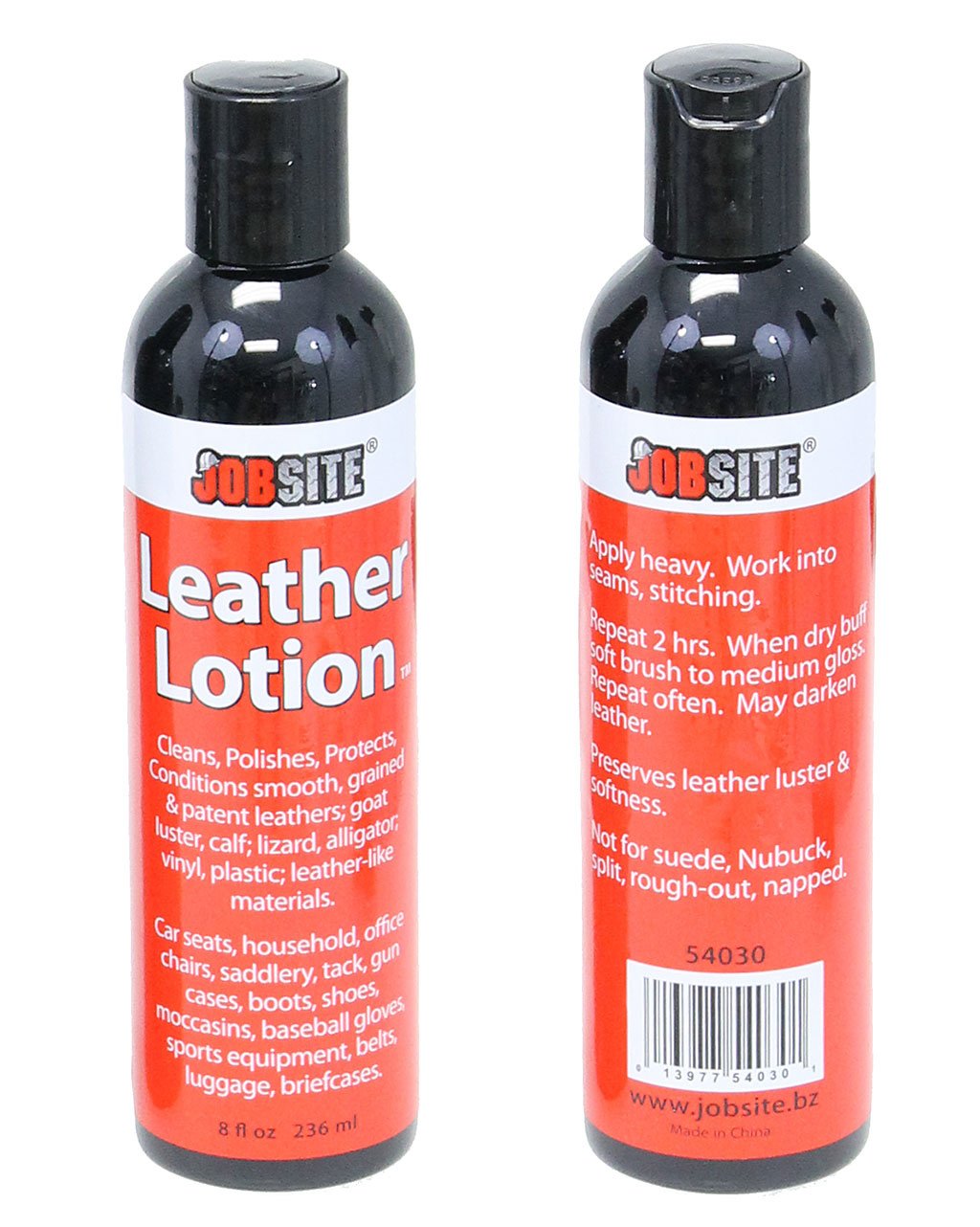
Caring for genuine leather takes the right products and a little consistency.
Frequently Asked Questions
Can I use vaseline to condition a leather jacket?
No, you should not use vaseline (petroleum jelly) to condition a leather jacket. Petroleum-based products can clog leather pores, preventing the material from breathing, and may cause deterioration over time. They can also leave a greasy residue and attract dirt. Instead, use a purpose-made leather conditioner that is formulated to penetrate and nourish leather fibers without clogging them. Always test any product on a hidden area first.
What can ruin a leather jacket?
Several things can damage a leather jacket: harsh chemicals like solvents or alcohol, petroleum-based products, excessive heat (including direct sunlight and radiators), prolonged soaking in water, and abrasive cleaners. Also, storing leather in damp or humid environments can lead to mold and mildew. Using the wrong conditioner or applying too much can leave residue or cause darkening. Always follow care instructions and use leather-safe products.
Do I need to clean my leather jacket before conditioning it?
Yes, cleaning before conditioning is essential. Surface dust and dirt can be pushed into the leather during conditioning, causing scratches or uneven absorption. Use a soft-bristled brush or a damp cloth to remove loose dirt, then wipe with a leather cleaner if needed. Allow the jacket to dry completely before applying conditioner. Skipping this step can trap grime and reduce the effectiveness of the conditioner.
How do I test a leather conditioner on a hidden area?
Apply a small amount of conditioner to an inconspicuous area, such as inside the hem or under the collar. Wait at least 24 hours to see how the leather reacts. Check for color change, darkening, or residue. If the leather looks good and feels softer, proceed with the rest of the jacket. If you notice any adverse reaction, do not use the product. This patch test helps prevent damage to visible areas.